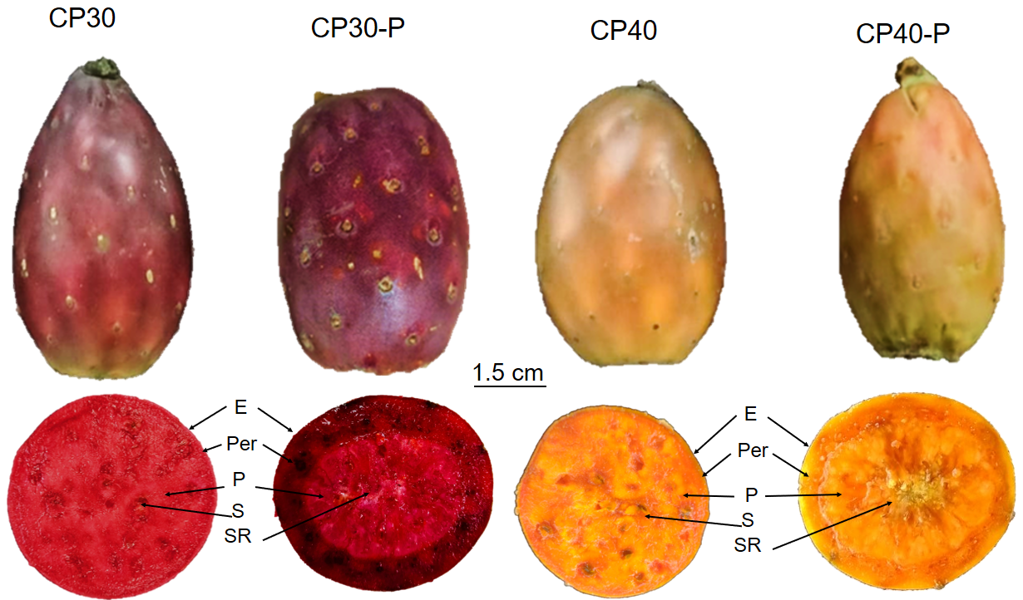
Cold Storage Effects on Quality of Parthenocarpic and Pollinated Prickly Pear (Opuntia ficus-indica Mill.) fruits
DOI:
https://doi.org/10.56890/jpacd.v28i.600Keywords:
permeability, stress, membrane, quality, edibleAbstract
Prickly pear (Opuntia spp.) is a fruit with high nutritional and functional value, but it is highly perishable. Parthenocarpic cactus pear fruits (CP30-P, CP40-P) are a viable commercial alternative because they have almost imperceptible seeds and longer shelf life. However, their response to cold storage, compared to pollinated prickly pear fruits, has not been reported. This study evaluated the effect of cold storage at 10?±?1?°C and 85?±?2% relative humidity on the quality of parthenocarpic (CP30-P and CP40-P) and pollinated (CP30 and CP40) prickly pear fruits. The variables such as weight loss, total soluble solids (°Brix), acidity, antioxidant activity, electrolyte leakage, and enzymatic activity (CAT and APX) were assessed during cold storage. The parthenocarpic fruits had higher weight loss compared to pollinated fruits (15% vs. 8%), greater electrolyte leakage, and lower catalase activity, indicating increased susceptibility to water loss and altered cell membrane permeability. However, these fruits also exhibited higher antioxidant activity at 30 and 45 days, suggesting a physiological response to oxidative stress induced by cold storage. No significant changes were observed in total soluble solids or titratable acidity, demonstrating that these parameters remained stable throughout the study. Cold storage is an effective strategy to preserve the postharvest quality of prickly pear, particularly regarding composition stability. Nevertheless, parthenocarpic fruits require additional strategies to minimize dehydration and improve resistance under prolonged storage conditions.
Publication Facts
Reviewer profiles N/A
Author statements
Indexed in
- Editor & editorial board
- profiles
- Academic society
- Journal of the Professional Association for Cactus Development
- Publisher
- Professional Association for Cactus Development

To learn about these publication facts, click 
PF is maintained by the Public Knowledge Project