ALTERNATIVAS DE MANEJO DEL NOPAL EN LA SABANA BRASILEÑA: ASPECTOS AGRONÓMICOS, COMPOSICIÓN QUÍMICA, CONTENIDO DE MACRO Y MICRONUTRIENTES
DOI:
https://doi.org/10.56890/jpacd.v28i.588Palabras clave:
cladodio, cosecha, intensidad de corteResumen
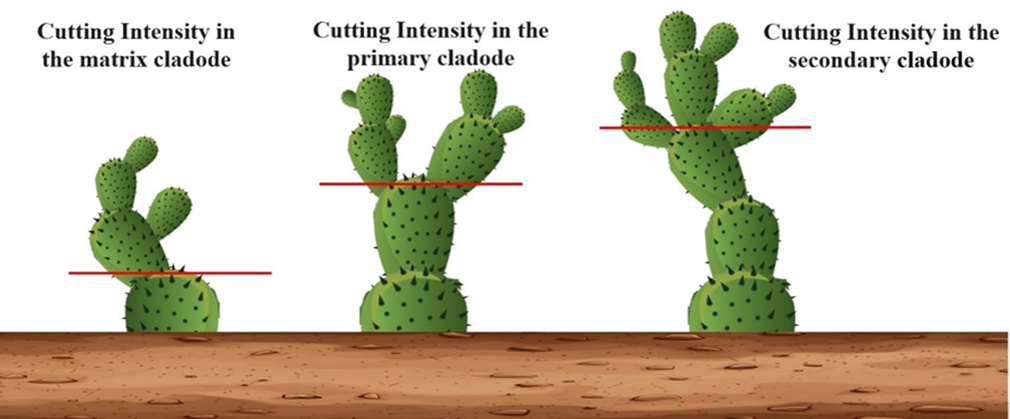
El nopal es una planta que puede sobrevivir y producir en las condiciones edáficas y climáticas de las regiones tropicales, pero su manejo aún es poco conocido en la sabana brasileña. El objetivo de este estudio fue evaluar alternativas de manejo para la variedad Doce de nopal, sometida a diferentes intensidades de corte preservando la matriz, cladodios primarios o secundarios, y dos edades de cosecha (anual y bienal), en condiciones de secano en la sabana brasileña. Se adoptó un diseño completamente aleatorizado en un esquema factorial 3 × 2, con ocho réplicas. Se evaluaron variables morfométricas y de producción, composición química, así como contenidos de macro y micronutrientes. Se encontraron mayores cantidades de rendimiento de masa de forraje verde (GFMY) y rendimiento de masa de forraje seco (DFMY) cuando se preservó hasta el cladodio primario, pero el contenido de proteína cruda fue similar al encontrado en la intensidad de corte del cladodio matriz. El manejo del nopal bajo cosecha bienal proporcionó mayor altura, GFMY, DFMY, potasio y acumulación de micronutrientes. La alternativa de manejo que ofrece mayores beneficios en términos de características agronómicas y producción es la que preserva hasta el cladodio primario asociado con la cosecha bienal. Además, la cosecha bienal proporciona una mejor composición química y una mayor acumulación de macro y micronutrientes en el cultivar de tuna Doce.
##plugins.generic.pfl.publicationFactsTitle##
##plugins.generic.pfl.reviewerProfiles## N/D
##plugins.generic.pfl.authorStatements##
Indexado: {$indexList}
-
##plugins.generic.pfl.indexedList##
- ##plugins.generic.pfl.editorAndBoard##
- ##plugins.generic.pfl.profiles##
- ##plugins.generic.pfl.academicSociety##
- Journal of the Professional Association for Cactus Development
- Editora:
- Professional Association for Cactus Development

Para obtener más información sobre un dato, haga clic

##plugins.generic.pfl.maintainedByPKP##